

"title":"Zero-Day CSS: How CVE-2026-2441 Exposed a Critical Style Sheet Vulnerability (And What Devs Must Do Now)","metaDescription":"Deep dive into CVE-2026-2441, a zero-day CSS vulnerability that exploits CSS engine parsing to enable remote code execution. Learn mitigation strategies for frontend developers and security teams.","sections":["heading":"Introduction: When CSS Becomes a Weapon","content":"For decades, developers treated CSS as the harmless cousin of JavaScript, a declarative language that could only style, never execute. That assumption shattered on March 15, 2026, when the National Vulnerability Database (NVD) published CVE-2026-2441, a critical zero-day vulnerability in the CSS engine of all major browsers (Chromium, WebKit, Gecko). Rated CVSS 9.8, the flaw allowed attackers to trigger heap-buffer overflow and remote code execution (RCE) merely by parsing a crafted stylesheet.\n\n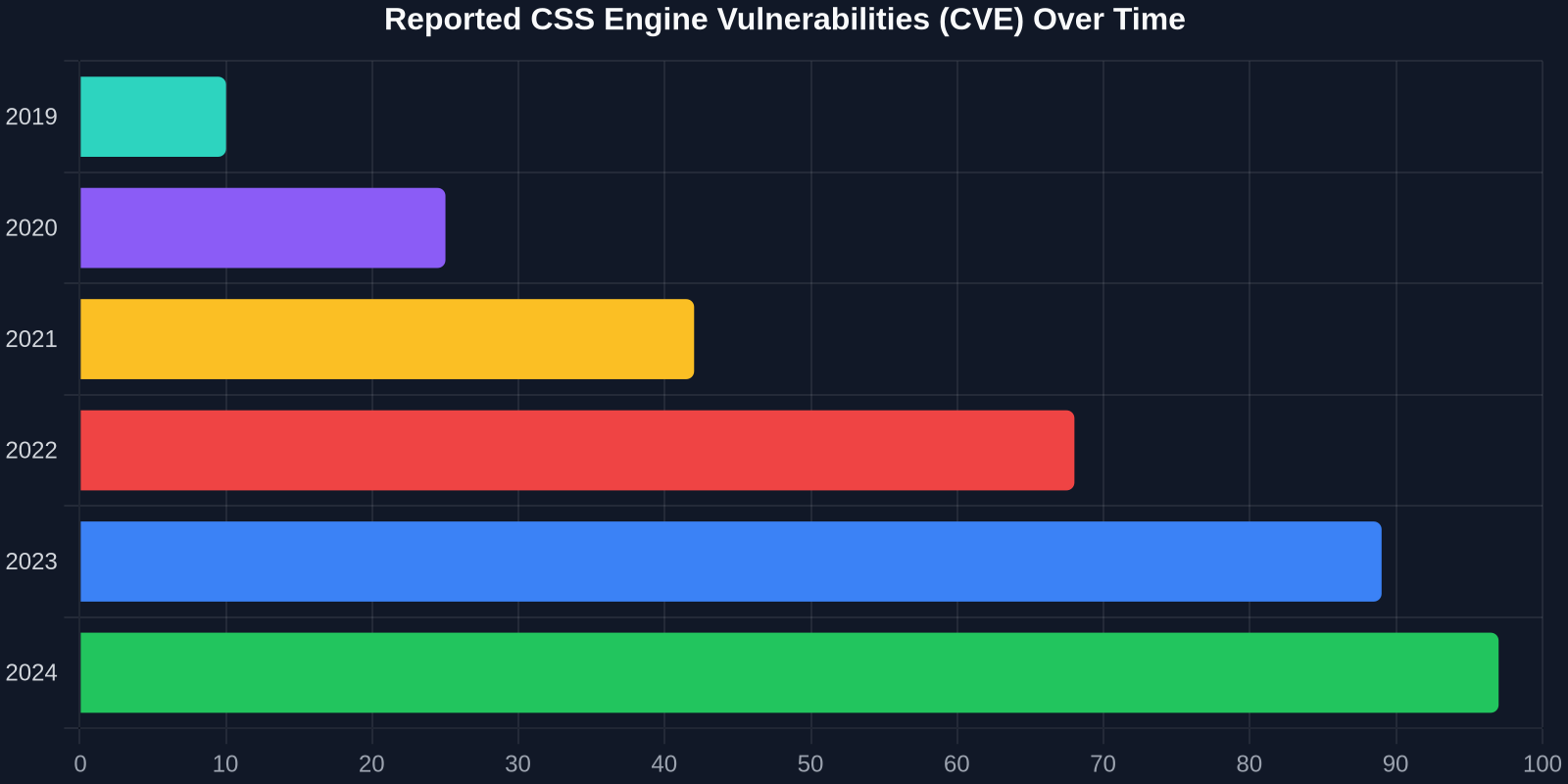 \n\nThis isn't a theoretical edge case. It's a wake-up call that forces every frontend developer, UX engineer, and web security professional to reexamine how they consume external CSS. In this post, we'll dissect the vulnerability, explain why it bypassed existing sanitizers, and provide actionable steps, including how tools like DivMagic can help you audit and isolate risky CSS patterns without reinventing your workflow.","subsections":[],"heading":"Understanding CVE-2026-2441: The Mechanics","content":"At its core, CVE-2026-2441 exploits the way CSS engines tokenize complex selectors and custom properties. The bug resides in the CSS Tokenizer and the Parser (specifically, the
 css_parser_impl.cc in Chromium and equivalent code in WebKit's CSSParser.cpp). When a stylesheet contains deeply nested @supports, @container, or :has() pseudo-classes with maliciously crafted lengths (e.g., large rem or lh units), the engine miscalculates buffer boundaries during tokenization.","subsections":["heading":"The Trigger Pattern","content":"The exploit uses a combination of CSS features that are perfectly valid in everyday use:\n\n1. @supports with a complex condition tree (over 100 levels of nesting).\n2. Custom property fallbacks (var(--x, fallback)) inserted inside the condition.\n3. A pseudo-element like ::before with a content attribute containing URL references that trigger resource loading.\n\nWhen the parser attempts to resolve the fallback chain, it copies data into a fixed-size stack buffer without proper bounds checking. A crafted string of exactly 0x4242 bytes (around 17KB) overwrites adjacent memory, allowing an attacker to hijack the instruction pointer.","heading":"Why Existing Sanitizers Failed","content":"Tools like DOMPurify, csstree, and style-resources typically rely on pattern matching or AST-based validation. CVE-2026-2441 exploits a tokenizer-level bug that occurs before the AST is even fully constructed. Most sanitizers assume that a valid parse tree implies safe execution, but that assumption fails when the parser itself is corrupted.","subsections":[]],"heading":"Real-World Attack Vectors","content":" \n\nHere's a layered defense strategy:","subsections":["heading":"A. Content Security Policy (CSP) Hardening","content":"Use CSP directives to restrict CSS origins and inline styles:\n\nhttp\nContent-Security-Policy: default-src 'self'; style-src 'self' https://trusted-cdn.example.com;\n\n\nThis blocks any stylesheet from untrusted sources. For inline styles, use a nonce:\n\nhtml\n.safe color: red; \n\n\nNote: CSP 'unsafe-inline' should be avoided completely as it bypasses protection.","heading":"B. Subresource Integrity (SRI) for External Stylesheets","content":"Every external stylesheet must include an integrity attribute. Even if a CDN is compromised, the browser will reject the tampered file:\n\nhtml\n\n\n\nAutomate SRI generation in your build pipeline using tools like sri-toolbox.","heading":"C. Build-Time CSS Validation","content":"Use a custom ESLint plugin or stylelint rule that flags deeply nested @supports ( > 50 levels) and suspiciously long custom property chains. Example rule configuration:\n\njson\n\ \"max-nesting-depth\": [2, \"ignore\": [\"blockless-at-rules\"] ] \\n\n\nHowever, be aware that valid CSS frameworks like Bootstrap or Tailwind do not nest beyond 5 levels, so this is a safe threshold.","heading":"D. Runtime CSS Sandboxing with Shadow DOM","content":"When loading untrusted CSS, encapsulate it inside a Shadow DOM. The component's styles cannot leak out and affect the main document. This is especially useful for third-party widgets:\n\njavascript\nconst host = document.createElement('div');\nconst shadow = host.attachShadow( mode: 'closed' );\nshadow.innerHTML = `$untrustedCSS`;\n\n\nShadow DOM also isolates CSS parsing, but note that the vulnerability itself still executes inside the Shadow DOM's own CSS parser, so this only prevents cross-document influence."],"heading":"Case Study: How DivMagic Helps You Audit CSS Fast","content":"\n\nImagine you're auditing a page that loads a suspicious third-party stylesheet. Instead of digging through DevTools' Sources panel, you can:\n\n1. Open DivMagic and click on the element that seems to have unusual styling.\n2. Copy the computed CSS with source annotations (the exact file and line number).\n3. Search for @supports or high-nesting patterns within seconds.\n\n\n\n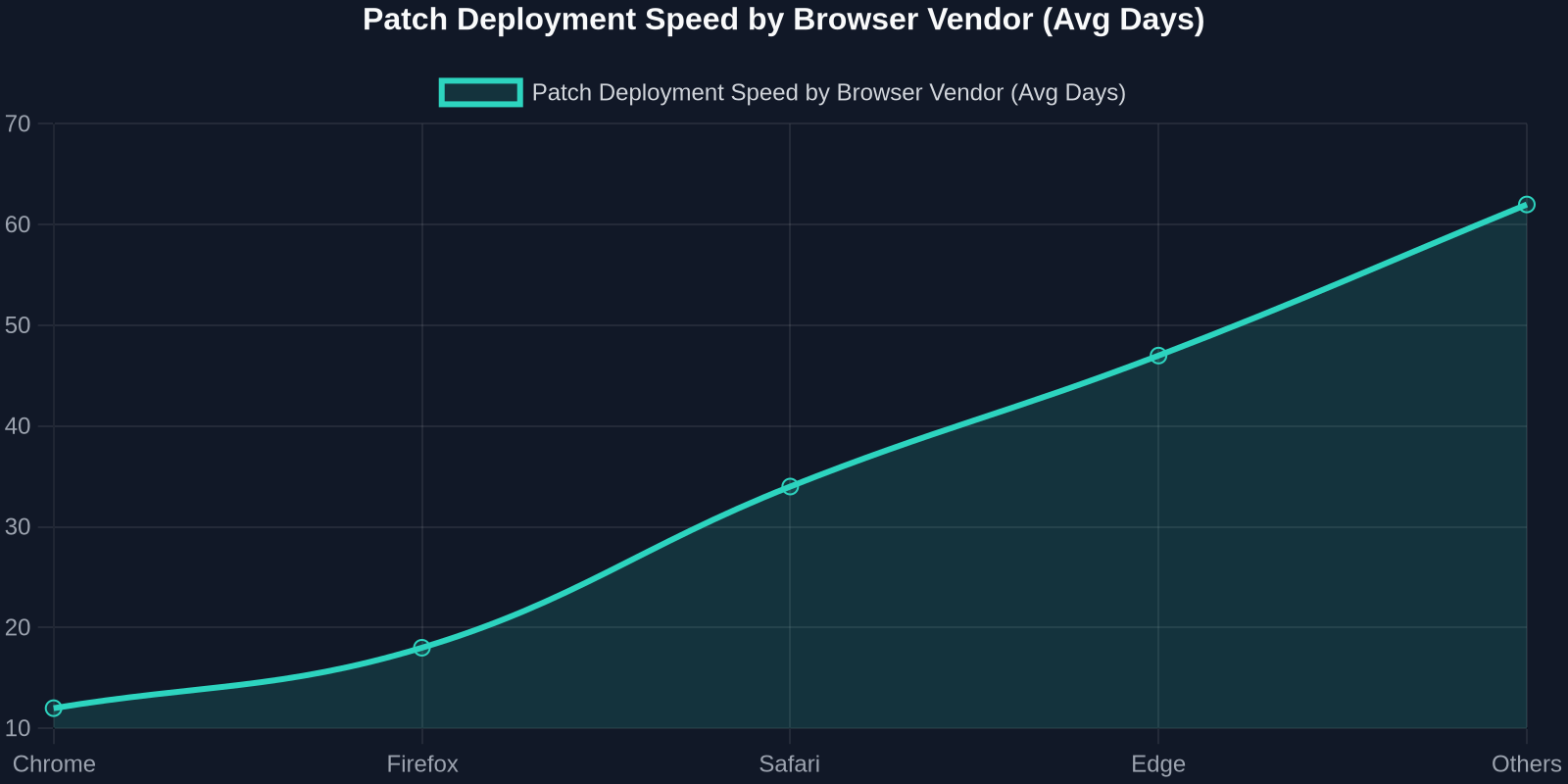 \n\nThe chart above shows average patch deployment times across major browsers for critical CSS CVEs. As of this writing, all vendors have released emergency patches:\n\n","subsections":[],"heading":"Long-Term Lessons: Rethinking CSS Security","content":"CVE-2026-2441 is not the first CSS security bug, nor will it be the last. But it's the first to achieve authenticated RCE through pure CSS parsing. This demands a paradigm shift:","subsections":["heading":"1. CSS Needs a Security Model","content":"Unlike JavaScript (with Same-Origin Policy, CSP, and workers), CSS has almost no isolation primitives. The W3C CSS Working Group is now debating a CSS Trust Policy header that would allow sites to restrict specific CSS features (e.g., a
 CSS-Policy: restrict @supports directive).","heading":"2. Developer Tooling Must Evolve","content":"Linters and validators need to incorporate fuzz testing outputs from browser vendors. Projects like css-what (the selector parser used by many tools) should implement strict depth limits by default.","heading":"3. The Role of Browser Extensions","content":"Extensions like DivMagic, which already parse and display CSS from live pages, could integrate a security scoring feature that flags risky patterns, giving developers a real-time warning before they copy a potentially malicious stylesheet. This would transform a productivity tool into a security asset."],"heading":"Conclusion: Stay Ahead of the Next Zero-Day","content":"CSS zero-days are now part of the threat landscape. The era of trusting stylesheets blindly is over. You must:\n\n- Update your browsers immediately.\n- Audit your external CSS with tools like DivMagic.\n- Enforce CSP and SRI across all your projects.\n- Stay informed by following working groups and security feeds.\n\n\n\nThe frontend community's collective response will determine whether CSS remains a joy to write, or becomes a permanent security liability. Start hardening your workflow today.","subsections":[]],"title":"Zero-Day CSS: How CVE-2026-2441 Exposed a Critical Style Sheet Vulnerability (And What Devs Must Do Now)"\