
Amazon Taps Corning for Optical Interconnects: A Game-Changer for AI Data Centers

In a strategic move to address the escalating power and bandwidth demands of artificial intelligence workloads, Amazon has partnered with Corning Incorporated to develop cutting-edge optical interconnects for its data centers. This collaboration leverages Corning's expertise in glass and photonics to create fiber-optic solutions that dramatically reduce power consumption while boosting data transfer speeds, potentially cutting energy use by up to 40% per connection. As AI models grow increasingly complex, the need for efficient, high-bandwidth communication between servers has become a critical bottleneck. This article explores how Amazon and Corning's partnership could redefine data center architecture, offering a scalable, sustainable path forward for hyperscale cloud providers.
The announcement, reported by CNBC on June 8, 2026, comes as Amazon continues to expand its AI infrastructure, including a recent $650 million acquisition of a data center powered by a nuclear facility. The optical interconnect technology developed with Corning is positioned to address key challenges in AI data centers: thermal management, energy efficiency, and signal integrity over long distances. By replacing traditional copper cables with fiber-optic connections, Amazon aims to reduce latency and power draw, enabling faster model training and inference. This move aligns with industry trends toward co-packaged optics and silicon photonics, which promise to extend Moore's Law into the era of exascale computing.
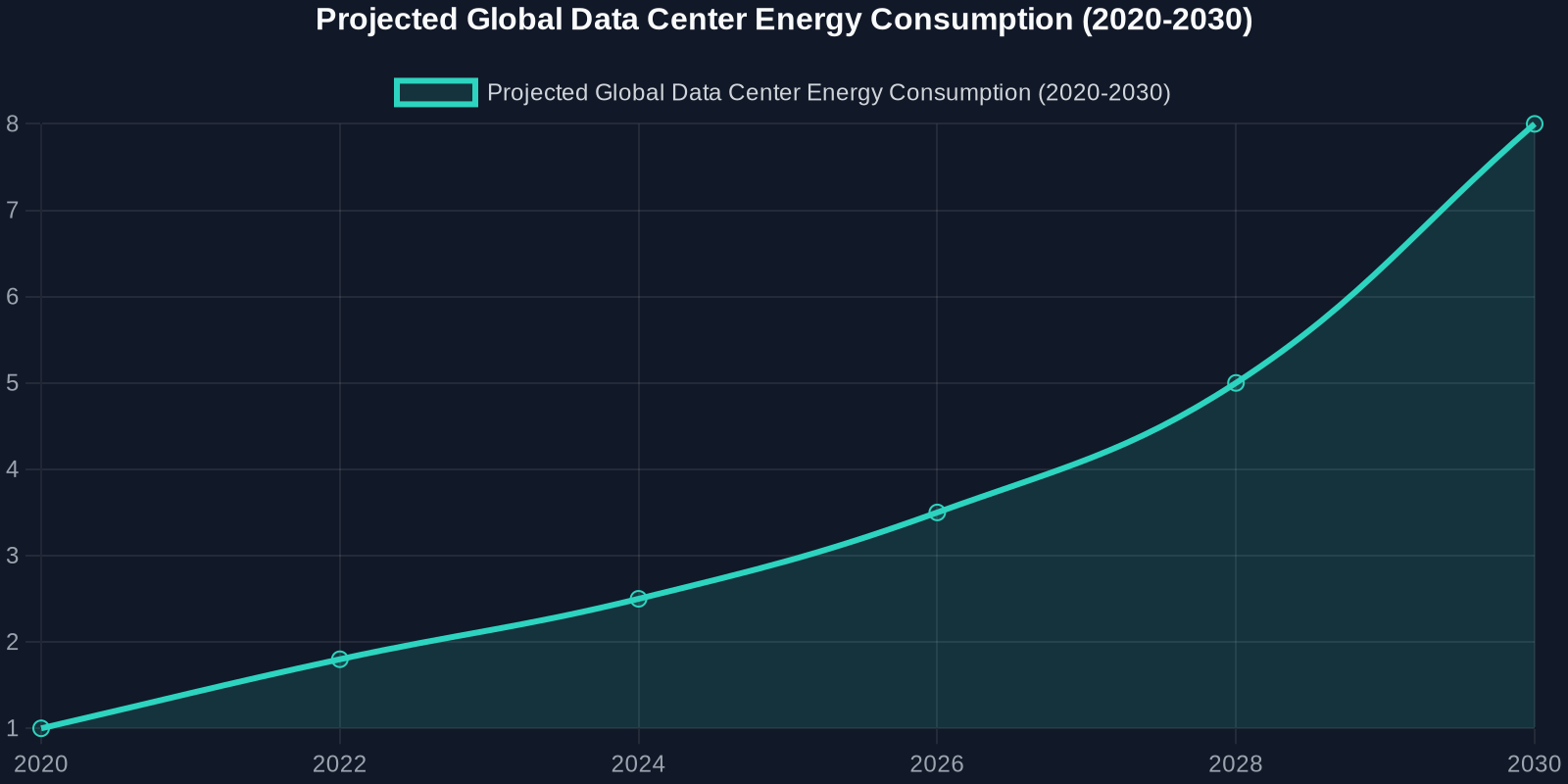
The partnership is particularly timely given the explosive growth of generative AI, which requires massive parallel processing across thousands of GPUs. According to industry estimates, data centers could consume up to 8% of global electricity by 2030, up from 1% today. Amazon's investment in optical interconnects is not just a technological upgrade; it's a strategic bet on energy-efficient AI infrastructure. Corning's optical solutions, already used in undersea cables and 5G networks, are now being adapted for the unique demands of hyperscale data centers. This collaboration could set a new standard for how cloud providers build and operate AI-optimized facilities.
The Growing Need for Optical Interconnects in AI Data Centers
AI workloads, particularly large language models and recommendation systems, require enormous amounts of data to be shuttled between compute nodes. Traditional copper-based interconnects, such as Ethernet and InfiniBand, face fundamental physical limitations: signal degradation over distances beyond a few meters, high power consumption, and thermal challenges. As data centers scale to tens of thousands of accelerators, these limitations become critical bottlenecks. Optical interconnects, by transmitting data as light rather than electrons, offer a compelling solution with lower latency, higher bandwidth, and significantly reduced power draw.
Physics of Optical vs. Copper Interconnects
The advantage of optical interconnects stems from the fundamental physics of light. Photons travel faster than electrons and experience less resistance, enabling data rates exceeding 1 terabit per second per fiber, compared to 400 gigabits per second for copper cables. Moreover, optical fibers can span hundreds of meters without signal repeaters, while copper requires active retiming every 5-10 meters. This difference is crucial in large data centers where servers may be spread across multiple halls. Corning's expertise in low-loss fiber optics ensures minimal signal degradation, while their photonic integration capabilities allow for compact transceivers that reduce space and cooling requirements.
By deploying optical interconnects, Amazon can also improve thermal management. Copper cables generate significant heat due to resistive losses, necessitating aggressive cooling systems that consume additional energy. Optical fibers, being non-conductive, produce negligible heat, allowing data centers to operate at higher densities with less cooling infrastructure. This thermal advantage is particularly valuable for liquid-cooled racks used in AI training clusters, where space is at a premium. Amazon's partnership with Corning likely focuses on developing pluggable optical modules that integrate seamlessly with existing server architectures, minimizing deployment complexity.
Corning's Technology: Glass, Photonics, and Scalability
Corning's innovation in this partnership builds on decades of leadership in glass science and photonics. The company's optical fiber, used in over 4 billion kilometers of installations worldwide, provides the backbone for global telecommunications. For data centers, Corning is developing specialized fibers with ultra-low loss and high bend tolerance, enabling dense cabling within racks. Their photonic integrated circuits (PICs) allow multiple optical functions—such as modulation, multiplexing, and detection—to be fabricated on a single glass chip, reducing size and cost.

Co-Packaged Optics and Silicon Photonics
A key innovation is co-packaged optics, where optical transceivers are mounted directly onto the same package as the switch ASIC, eliminating the need for separate pluggable modules. This approach reduces power consumption by 50% compared to traditional pluggables and increases bandwidth density. Corning's photonic platform integrates with silicon photonics, allowing for high-volume manufacturing using standard CMOS processes. This combination could enable Amazon to deploy optical interconnects at scale, overcoming the cost barriers that have limited adoption to niche applications.
Corning's technology also supports disaggregated computing, where accelerators and memory are physically separated but optically connected. This allows for heterogeneous computing—mixing GPUs, CPUs, and specialized ASICs—without performance penalties. Amazon could use this to create custom AI clusters optimized for specific workloads, such as Amazon Bedrock for foundation models or SageMaker for custom training. The ability to mix and match components dynamically could reduce hardware costs by 20-30% while improving utilization rates.
Economic and Environmental Benefits
The economic case for optical interconnects is compelling. Data centers are among the largest consumers of electricity, with power costs accounting for up to 40% of total operational expenses. By reducing power consumption by 40% per connection, Amazon can achieve significant cost savings. For a data center with 100,000 optical interconnects, the annual savings could exceed $50 million, assuming an average power cost of $0.10 per kilowatt-hour. These savings can be reinvested into R&D or passed on to customers through lower AWS pricing.

Smaller cloud providers and enterprise data centers may also benefit. If Amazon achieves cost reductions through scale, optical interconnects could become affordable for mainstream use. Corning's manufacturing scale ensures that prices will drop as volume increases, similar to the trend in Ethernet optics. This democratization of photonics could enable more organizations to build private AI infrastructure, reducing reliance on public cloud for sensitive workloads.
Challenges and Considerations
Despite the promise, optical interconnects face several challenges. First, cost remains higher than copper, particularly for short-distance connections under 10 meters. However, as Amazon scales deployment, economies of scale will narrow the gap. Second, integration complexity requires co-design of optical modules with server hardware, which may necessitate redesigning network interface cards and switch boards. Amazon's deep integration with Corning can mitigate this, but it may limit compatibility with off-the-shelf gear.

Another challenge is reliability. Optical transceivers are sensitive to temperature and vibration, which are common in data centers. Corning's ruggedized designs aim to address this, but field experience is still limited. Additionally, the long-term availability of raw materials for advanced photonics, such as rare-earth dopants for amplifiers, could constrain production. Amazon's scale may mitigate supply chain risks, but smaller players might face shortages.
Finally, skill gaps pose a barrier. Managing optical networks requires different expertise than copper-based systems, including knowledge of fiber splicing, cleaning, and testing. Amazon's partner ecosystem, including Corning's training programs, can help, but the industry at large will need to invest in education. Universities and certification bodies should expand photonics curricula to meet demand.
Key Takeaways for Technology Leaders
The Amazon-Corning partnership offers several lessons for technology leaders evaluating AI infrastructure investments. First, network performance is becoming as important as compute performance in AI workloads. Leaders should assess their data center architectures for bottlenecks, particularly in inter-node communication. Optical interconnects provide a path to eliminate these bottlenecks while reducing energy costs.
Second, partnerships can accelerate innovation. Rather than developing every technology in-house, aligning with specialized vendors like Corning provides access to advanced R&D and manufacturing capabilities. This strategy reduces risk and speeds time-to-market, especially in fast-evolving domains like photonics.
Third, sustainability and efficiency go hand-in-hand. Optical interconnects demonstrate that environmentally friendly solutions can also improve performance and cost. Technology leaders should prioritize investments that deliver multiple benefits, from lower carbon emissions to higher profit margins.
Finally, scalability requires foresight. The next wave of AI models, potentially with trillions of parameters, will stress current infrastructure. By adopting optical interconnects now, Amazon is future-proofing its data centers for this coming demand. Other organizations should follow suit, adapting their architecture to accommodate future bandwidth and latency requirements.
Conclusion
Amazon's partnership with Corning marks a pivotal moment in the evolution of AI data centers. Optical interconnects, powered by Corning's glass and photonics expertise, offer a scalable solution to the bandwidth and energy challenges that threaten to impede AI progress. By reducing power consumption by 40% and enabling data rates exceeding 1 terabit per second, this technology positions Amazon to lead in the generative AI era. The move also strengthens Amazon's commitment to sustainability, aligning with its Climate Pledge.
As other cloud providers respond, the entire industry will benefit from faster innovation and lower costs. For business leaders, the message is clear: optical interconnects are no longer experimental but a strategic imperative for AI infrastructure. To stay competitive, organizations must evaluate their network architecture and consider partnerships that bring cutting-edge photonics to their data centers.
Ready to future-proof your AI infrastructure? Start by assessing your data center's network bottlenecks and energy profile. Reach out to AWS solutions architects for guidance on optical interconnect integration, or explore Corning's latest product offerings. The future of AI depends on the network that connects it—make sure yours is ready.